Introduction
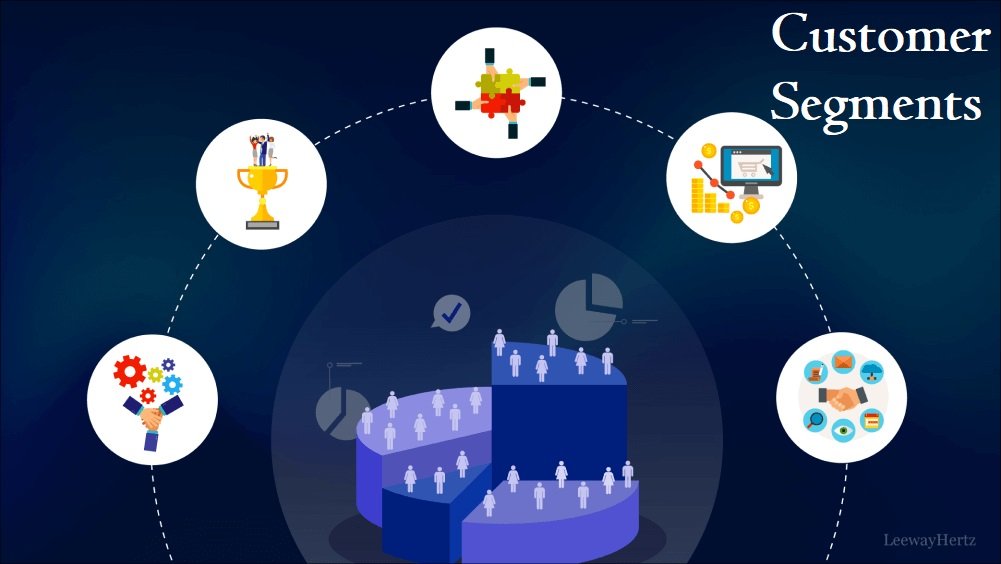
HubSpot Customer segments are a powerful way to prepare contacts, companies, offers, and other CRM facts into significant companies primarily based on shared traits, behaviors, or business standards. Segmentation allows groups deliver greater relevant advertising, improve sales targeting, customize patron studies, and make better decisions from CRM data.
HubSpot currently makes use of the time period “segments” for what were previously called lists. According to HubSpot’s current documentation, segments can institution facts the usage of assets values and different standards, and they can be used in tools which includes advertising and marketing emails, campaigns, and workflows.
Instead of sending the same message to each contact, agencies can create unique businesses along with new leads, existing customers, fairly engaged contacts, inactive customers, customers from a selected enterprise, or possibilities from a particular geographic place.
This manual explains what HubSpot client segments are, how they work, the difference between active and static segments, a way to create them, and the excellent practices you need to follow.
What Are HubSpot Customer Segments?
HubSpot customer segments are agencies of CRM records created consistent with particular criteria.
For example, you may create a phase containing:
- Contacts from India
- Customers who bought a product currently
- Leads with a particular lifecycle degree
- Contacts who submitted a particular shape
- Customers who interacted with advertising emails
- Companies in a specific enterprise
- High-fee customers
- Contacts who have not engaged these days
HubSpot segments can use residences, occasions, memberships, and information from related statistics as filtering criteria.
This lets in corporations to transport past a basic Customer database and create focused organizations that can be used for advertising, income, service, automation, and reporting.
Why Are Customer Segments Important?
A big CRM database can comprise lots or maybe thousands and thousands of data. Treating all of us precisely the same can result in beside the point conversation.
Customer segmentation helps resolve this trouble.
1. Better Personalization
Different clients have one of a kind needs. Segmentation permits you to tailor communication in line with Customer traits and behavior.
For example:
- New leads can get hold of instructional content material.
- Existing clients can receive product suggestions.
- Repeat customers can receive loyalty gives.
- Inactive contacts can obtain re-engagement campaigns.
2. More Relevant Marketing
Instead of sending one ordinary e mail for your whole database, you may send one-of-a-kind campaigns to extraordinary segments.
This can make your advertising communication extra relevant and focused.
3. Improved Sales Targeting
Sales teams can create organizations primarily based on factors such as lifecycle level, organisation length, enterprise, vicinity, or engagement.
This allows sales representatives prioritize the contacts and businesses which are most relevant to their modern objectives.
4. Better Automation
Segments can be used with different HubSpot tools. For example, HubSpot documentation notes that segments can be used in advertising emails, campaigns, workflows, and other equipment.
5. Easier CRM Management
Segmentation makes a big CRM database less complicated to understand and manage.
Types of HubSpot Customer Segments
HubSpot currently offers principal phase sorts:
| Segment Type | How It Works | Best Use Case |
|---|---|---|
| Active segment | Automatically updates membership when records meet or stop meeting the criteria. | Ongoing marketing, lead management, dynamic targeting |
| Static segment | Membership does not automatically change based on the original criteria | One-time campaigns, historical groups, fixed lists |
| Saved view | Saves a filtered view of records for easier access | Internal CRM organization |
| Custom segment properties | Adds information about the segment itself | Segment organization and management |
HubSpot states that active segments mechanically upload facts when they meet the standards and cast off them after they now not meet the criteria. Static segments, then again, do not robotically update membership after introduction.
Active Segments in HubSpot
An energetic phase is dynamic.
Suppose you create a phase the usage of this circumstance:
Lifecycle Stage = Customer
When a new touch will become a patron, that touch can input the phase robotically. If an present record no longer meets the standards, it is able to depart the phase.
This makes active segments particularly useful for constantly changing client databases.
Examples of Active Segments
You should create:
- All cutting-edge customers
- All contacts who subscribed to a particular email subscription
- All leads in a selected vicinity
- Contacts who recently interacted with your internet site
- Companies belonging to a specific industry
- Contacts belonging to a specific lifecycle level
HubSpot offers filtering alternatives based totally on homes, events, memberships, and associated-item statistics.
Static Segments in HubSpot
A static section represents a set organization of facts.
For example, think you need to create a collection of contacts who attended a specific event in August 2026. Once the section is created, you can want it to represent that ancient institution instead of constantly changing according to modern CRM statistics.
Static segments also are useful while you need guide control over club.
HubSpot explains that static segments do not robotically replace their club after creation.
HubSpot Segments vs Saved Views
One commonplace supply of misunderstanding is the difference among a section and a stored view.
A saved view is beneficial while you really need to organize and again and again get right of entry to a filtered organization of information inside a selected CRM object.
A section is extra appropriate whilst the group wishes to be used by different HubSpot tools, together with marketing emails or campaigns.
HubSpot notes that segments offer additional filtering competencies in comparison with views, along with criteria inclusive of web page perspectives, shape submissions, e-mail interactions, and associated-report facts.
Simple Example
Saved view:
Show me contacts which have not been contacted lately.
Segment:
Create a group of contacts who’re subscribed to advertising communique so I can use them in a marketing campaign.
Common Ways to Segment Customers in HubSpot
There are many approaches to create customer segments.
1. Demographic Segmentation
You can segment customers primarily based on facts including:
- Country
- State or region
- Job title
- Age, wherein correctly gathered
- Language
- Other relevant touch residences
2. Geographic Segmentation
Businesses running in a couple of markets can create segments based on place.
For example:
- India
- United States
- United Kingdom
- Europe
- Specific states or regions
three. Company-Based Segmentation
B2B corporations can phase contacts based totally on related organization data.
Examples include:
- Industry
- Company length
- Revenue
- Location
- Customer kind
4. Lifecycle Stage Segmentation
Lifecycle stage may be beneficial for isolating:
- Subscribers
- Leads
- Marketing-certified leads
- Sales-qualified leads
- Opportunities
- Customers
The specific levels and definitions must fit your organisation’s CRM manner.
5. Behavioral Segmentation
Behavior is frequently extra beneficial than demographic statistics by myself.
You can build segments based on interactions consisting of:
- Website hobby
- Form submissions
- Email interactions
- CTA interactions
- Other tracked events
HubSpot’s modern-day segment filtering gadget helps assets and event-primarily based criteria, among different options.
6. Purchase-Based Segmentation
Ecommerce and income groups can create businesses based totally on purchase-associated facts.
Examples encompass:
- First-time customers
- Repeat customers
- High-value clients
- Customers of a selected product
- Customers who’ve not purchased these days
How to Create a Customer Segment in HubSpot
The exact interface and available capabilities can vary depending for your HubSpot account and subscription, however the popular manner is simple.
Step 1: Open Segments
In HubSpot, navigate to the CRM area and open Segments. HubSpot’s current documentation places segments below CRM > Segments in the interface.
Step 2: Create a New Segment
Choose the choice to create a segment and pick out the form of record you want to group.
Depending on your account and use case, this may contain contacts, agencies, offers, or other supported items.
Step 3: Select Your Filters
Add criteria that define your target market.
For instance:
Country = India
or:
Lifecycle Stage = Customer
You can add more than one criteria to make the segment greater precise.
Step 4: Use AND or OR Logic Carefully
HubSpot supports both AND and OR common sense.
AND method a record should meet all detailed situations.
Example:
Country = India
AND
Lifecycle Stage = Customer
This identifies contacts who fulfill each conditions.
OR manner a record can meet at least one circumstance.
Example:
Country = India
OR
Country = United States
This consists of information from both vicinity.
Step 5: Test Your Criteria
HubSpot presents options to check whether records match your selected standards. This is useful for figuring out errors before relying on a phase for a campaign.
Step 6: Name the Segment Clearly
Avoid vague names including:
List 1
New List
Test Audience
Instead, use descriptive names inclusive of:
Customers – India – 2026
or:
Leads – SaaS Industry – High Engagement
A clear naming machine becomes more and more critical as your CRM grows.
Step 7: Save the Segment
After reviewing the filters and anticipated facts, store the segment.
Important HubSpot Customer Segment Examples
Here are sensible phase thoughts that many organizations can adapt:
| Segment Name | Example Criteria | Purpose |
| New Leads | Lifecycle Stage = Lead | Lead nurturing |
| Existing Customers | Lifecycle Stage = Customer | Customer communication |
| High-Value Customers | Purchase/deal value above chosen threshold | VIP campaigns |
| Inactive Contacts | No recent engagement | Re-engagement |
| Form Responders | Submitted a specific form | Follow-up |
| Regional Customers | Country/Region = target area | Local campaigns |
| Product Customers | Purchased/associated with specific product | Product-specific messaging |
| Repeat Customers | Multiple purchases/deals | Loyalty campaigns |
| Event Attendees | Event participation criteria | Follow-up campaign |
| Sales-Ready Leads | Defined qualification criteria | Sales outreach |
These are examples as opposed to customary rules. Your segment standards must reflect your personal commercial enterprise version and reliable CRM records.
Using HubSpot Properties for Segmentation
Properties are one of the foundations of powerful HubSpot segmentation.
HubSpot houses store data approximately CRM facts, consisting of contact, enterprise, deal, or ticket records. HubSpot explains that properties may be used to section, track, and report on CRM statistics, and agencies can create custom houses when the usual properties no longer meet their needs.
For example, a enterprise may create custom houses for:
- Customer type
- Preferred product
- Industry category
- Customer priority
- Lead source
- Account tier
However, custom houses need to be deliberate carefully. Poorly designed residences can bring about inconsistent information and unreliable segments.
Using Segments for Email Marketing
One of the most essential programs of customer segmentation is e-mail advertising and marketing.
Instead of sending every email to your entire database, you could target particular agencies.
For example:
Segment: Existing clients
Email: Product update
Another example:
Segment: Leads who downloaded an e-book
Email: Educational observe-up collection
This method lets organizations shape the message with the Customer’s stage and hobbies.
For advertising verbal exchange, agencies must additionally take note of subscription popularity, consent, and applicable privacy laws.
Using Segments With Workflows
Segments can also assist automation.
For instance, you might use a phase to discover a selected organization of statistics and then use that group in an automated procedure.
HubSpot’s documentation additionally notes that workflow-associated filtering and certain automation functions depend upon subscription stage.
A easy approach will be:
- Create a segment.
- Define the required criteria.
- Review matching records.
- Use the section in the precise HubSpot device.
- Monitor overall performance.
- Update the segmentation strategy whilst enterprise requirements alternate.
Best Practices for HubSpot Customer Segments
1. Start With a Clear Business Goal
Do not create segments absolutely due to the fact you can.
Before growing one, ask:
Why do I need this segment?
For example:
- Email marketing campaign
- Sales prioritization
- Customer retention
- Re-engagement
- Reporting
- Product merchandising
2. Keep Segment Names Consistent
Create a naming conference that your whole crew is aware of.
For instance:
Audience – Lifecycle – Region – Purpose
A constant shape makes segments simpler to discover.
3. Avoid Over-Segmentation
Creating loads of tiny segments could make your CRM tough to manipulate.
Only create segments that have a meaningful commercial enterprise reason.
4. Use Accurate Data
Segmentation is most effective as suitable as the data in the back of it.
If Customer records are incomplete or wrong, your segments can also be misguided.
5. Use AND and OR Carefully
Incorrect clear out common sense can dramatically alternate the audience.
Always test the standards earlier than launching an important campaign.
6. Review Segments Regularly
Business conditions trade. A section that became useful six months in the past can also not be necessary.
HubSpot permits customers to edit section filters, details, settings, and different configurations after introduction.
7. Document the Purpose
HubSpot additionally supports custom segment homes, which can be used to document records consisting of a phase’s motive or the team chargeable for it.
This may be in particular useful for large groups.
Common Mistakes to Avoid
Mistake 1: Creating Segments Without a Purpose
Every segment should guide a enterprise objective.
Mistake 2: Using Poorly Maintained Data
Incorrect houses cause incorrect audiences.
Mistake 3: Confusing Views With Segments
If the group desires for use in advertising equipment, a phase may be greater appropriate than honestly saving a CRM view.
Mistake 4: Ignoring Consent and Subscription Status
Before sending marketing communications, make sure contacts are eligible to get hold of the verbal exchange.
Mistake 5: Using Too Many Filters
More filters do not automatically suggest better segmentation.
Sometimes a easy, well-described segment performs better than an extremely complicated one.
HubSpot Customer Segmentation Strategy
A realistic segmentation approach can observe this framework:
Step 1: Identify Your Objective
Decide what you need to attain.
Step 2: Identify Your Audience
Determine which customers or prospects are relevant.
Step 3: Select Reliable Data
Choose residences or behavioral statistics that accurately identifies that target market.
Step 4: Build the Segment
Create the filters and select appropriate AND/OR good judgment.
Step 5: Test the Results
Review the records with the aid of the criteria.
Step 6: Activate the Business Process
Use the phase for the applicable marketing campaign, workflow, sales technique, or analysis.
Step 7: Measure Results
Monitor the consequences and decide whether or not the segment is generating the supposed enterprise final results.
Final Thoughts
HubSpot customer segments offer a based way to turn CRM facts into focused audiences. By grouping statistics according to residences, behaviors, lifecycle degrees, engagement, region, organization traits, or different significant standards, corporations can create greater relevant advertising and sales reports.
The two main segmentation types, active and static, ic—serve distinct purposes. Active segments are especially beneficial when membership ought to change automatically as CRM statistics are modified, while static segments are useful when you want a fixed organization.
The only segmentation method isn’t always necessarily the one with the greatest number of segments. Instead, it is the approach that uses accurate data, clear criteria, regular naming, suitable automation, and a specific enterprise goal.